Paying off debt can impact your credit score in different ways, depending on the type of debt. Here’s what you need to know:
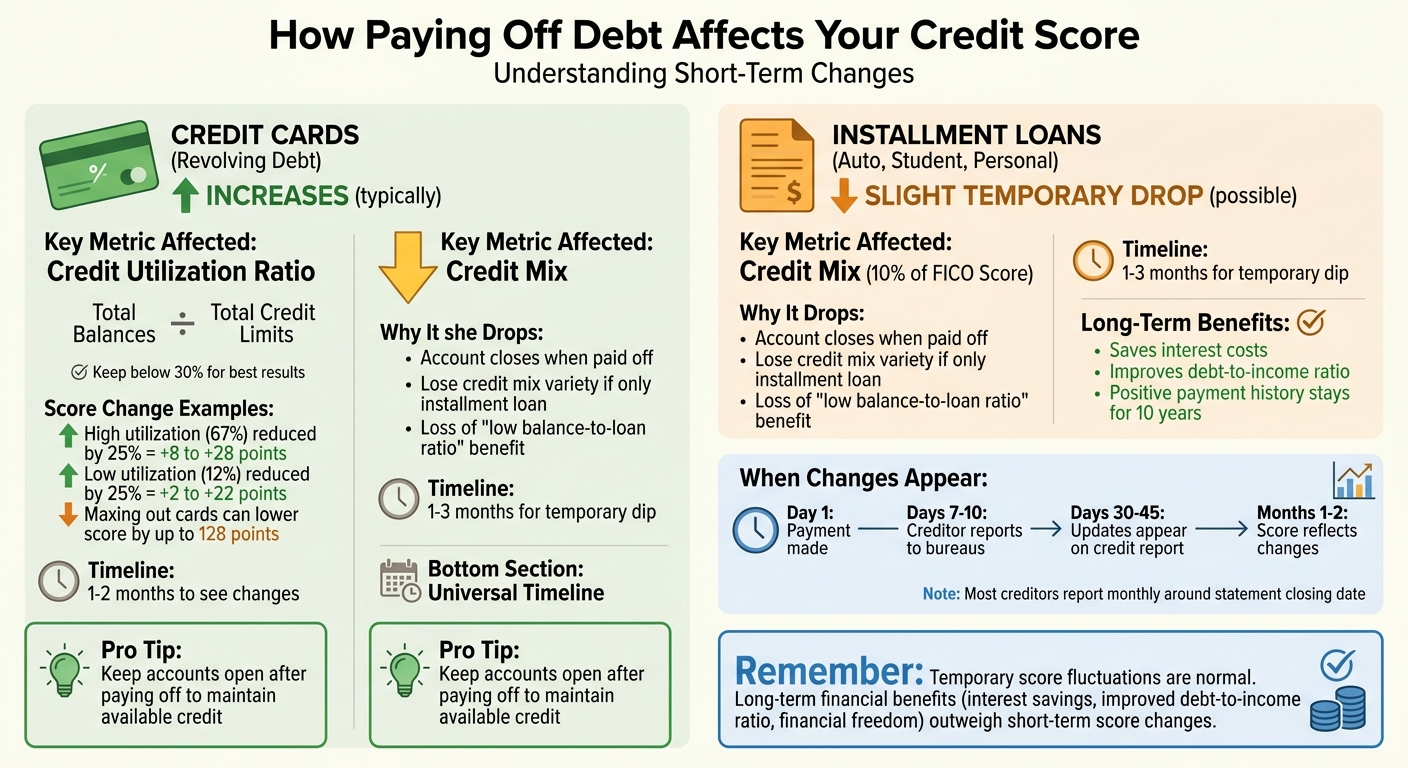
- Credit Cards: Paying down credit card balances improves your credit score by lowering your credit utilization ratio. Changes typically show up within 1–2 months.
- Installment Loans: Paying off loans like auto or student loans may cause a slight, temporary score drop. This happens because closing the account affects your credit mix and other scoring factors.
- Timing: Credit scores update every 30–45 days, so changes may take up to two billing cycles to reflect on your report.
- Long-Term Benefits: Despite short-term fluctuations, paying off debt reduces interest costs, improves your financial profile, and helps in future loan applications.
Focus on reducing high-interest debt first and keep credit card accounts open after paying them off to maintain your credit history and utilization ratio. Temporary score changes are normal and shouldn’t deter your debt repayment goals.
How Paying Off Different Debt Types Affects Your Credit Score
How Paying Off Credit Card Debt Affects Your Score
Understanding Credit Utilization Ratio
Your credit utilization ratio shows how much of your available credit you’re using. To calculate it, divide your total credit card balances by your total credit limits. For instance, if you owe $3,000 and your total credit limit is $10,000, your utilization ratio is 30%.
FICO Scores consider both your overall credit utilization across all cards and the utilization on each card individually. Experts generally suggest keeping this ratio below 30% to avoid negatively affecting your score.
"Lower credit utilization is better for your credit scores." – Jennifer White, Consumer Education Specialist, Experian
A high credit utilization ratio can hurt your score significantly. For example, maxing out your credit cards could lower your score by up to 128 points if you’ve previously maintained low utilization. On the other hand, paying down balances can improve your score, typically within one to two months after the updated information is reported. Reducing your balances directly impacts your available credit, which can lead to noticeable score changes.
Score Changes After Paying Down Credit Cards
When you lower your credit utilization, your score generally adjusts within one to two months as creditors report updated balances to the credit bureaus. The improvement in your score depends on your starting utilization rate. For example, a 25% reduction in revolving balances boosted scores by 8 to 28 points for individuals with high utilization (67%) and by 2 to 22 points for those with lower utilization (12%).
"Paying off revolving debt typically increases your credit score in one to two months." – Karen Axelton, Senior Personal Finance Writer, Experian
To see results faster, consider paying your balance before the billing cycle ends. This ensures a lower balance gets reported sooner. Also, keep your paid-off credit card accounts open. Closing them reduces your total available credit, which could raise your overall utilization ratio and potentially lower your score.
sbb-itb-0a60575
How Paying Off Installment Loans Affects Your Score
Credit Mix and Score Calculations
Your credit mix reflects the variety of account types listed on your credit report. This includes a blend of revolving credit (like credit cards) and installment credit (such as auto loans, mortgages, or personal loans). It’s a small but meaningful part of your FICO Score, making up 10% of the calculation. Considering that 90% of top lenders rely on FICO Scores, this factor can influence lending decisions.
Here’s the catch: installment loans close once they’re paid off. If that loan was your only installment account, you lose the variety in your credit mix. Lenders tend to view borrowers who manage both revolving and installment credit responsibly as less risky.
"Analysis of credit data shows that having a low installment loan balance to loan amount ratio is even less risky than having no active installment loans at all." – myFICO
This is why paying off an installment loan could lead to a slight, temporary drop in your credit score.
Why Your Score Might Drop Temporarily
When you pay off an installment loan, your credit score might dip for a short period – typically one to three months. Why? Because closing the account impacts several scoring factors at once. If the loan was your only installment account, you lose the credit mix benefit entirely.
Another factor at play is how scoring models evaluate installment loans. They compare your current loan balance to the original amount borrowed. Having an active loan with a very low remaining balance signals financial responsibility. When you pay it off, this "low-utilization" benefit disappears, which can nudge your score downward.
That said, the advantages of paying off an installment loan often outweigh this temporary dip. You save on interest, improve your debt-to-income ratio (a key factor for mortgage approvals), and maintain a positive payment history for up to 10 years after the account closes – assuming payments were made on time. While your score may take a short-term hit, these long-term benefits can significantly strengthen your overall financial standing.
When Credit Scores Update After Debt Payments
How Creditors Report to Credit Bureaus
When you make a debt payment, your creditor doesn’t immediately notify the credit bureaus. Instead, most lenders report account activity on a monthly basis, usually around the time your statement closes or shortly afterward. While your payment might be processed and visible in the creditor’s system within a day or two, it won’t be reflected in your credit report until the next reporting cycle.
For credit card accounts, this update typically appears on your credit report about 7–10 days after the statement closing date. To get a better idea of when your creditor reports, look for the "statement date" on your bill. This date indicates when your balance and activity are finalized and sent to the credit bureaus.
It’s also worth noting that not all creditors report to every major credit bureau. Some may report to only one or two, while others might not report at all. If you don’t see your payment or payoff reflected on your credit report after about two months, it’s a good idea to reach out to your lender to confirm whether the data was sent.
Knowing how and when creditors report account activity gives you a clearer picture of how often your credit information is updated.
Credit Bureau Update Schedules
Once creditors submit their updates, the credit bureaus process the data according to their own schedules. Since different lenders have varying billing cycles, your credit report may receive updates several times throughout the month. Most billing cycles fall within the range of 28 to 31 days.
Your credit score isn’t a fixed number – it’s recalculated whenever your credit report is accessed. This means your score reflects the most recent information available at that moment. Because lenders report at different times, your credit score can technically fluctuate multiple times within a single month. For a debt payoff to be fully integrated into your credit score, allow about one to two full billing cycles, which translates to roughly one to two months.
Short-Term vs. Long-Term Score Effects
Temporary Score Fluctuations Explained
Paying off debt can cause your credit score to shift temporarily. For example, paying off a credit card often boosts your score within a month or two by lowering your credit utilization ratio. On the other hand, paying off an installment loan – like a car or student loan – might lead to a slight dip, especially if it’s your only installment account.
These changes are usually minor and short-lived. Most credit score adjustments settle within one to three months. For those with poor to fair credit, it may take closer to three months to fully recover after closing an account. These fluctuations aren’t a reflection of poor financial decisions but rather how credit scoring systems weigh different factors.
"It can be frustrating to see a drop in your credit score when you make a smart financial decision. Remember: your credit score is just one piece of your overall financial health." – Amy Thomann, Head of Consumer Credit Education, TransUnion
While these short-term changes might feel unsettling, the long-term advantages of paying off debt far outweigh the temporary score shifts.
Long-Term Credit Benefits of Debt Payoff
Over time, paying off debt strengthens your credit profile. It reduces interest costs and improves your debt-to-income ratio, which is a critical factor for lenders reviewing applications for mortgages or other major loans. Additionally, a paid-off account in good standing stays on your credit report for 10 years, showcasing responsible credit behavior even after the account is closed.
The benefits extend beyond just your credit score. Paying off debt frees you from ongoing interest payments, allowing you to redirect those funds toward savings, investments, or other financial goals. Keeping debt solely to maintain a few extra credit points rarely justifies the cost of continued interest payments.
You Paid Off Debt… Now Your Score Fell? Here’s Why
Conclusion
Research highlights that paying off debt impacts your credit score differently based on the type of debt. For example, reducing credit card balances often improves your score within one to two months by lowering your credit utilization ratio. On the other hand, paying off an installment loan – like a car or student loan – might cause a small, temporary dip if it’s your only installment account. These changes typically balance out within a few months, so short-term fluctuations shouldn’t disrupt your debt repayment goals.
Timing also matters. Creditors usually update reports every 30–45 days, so consider this cycle when planning debt payments, especially if you’re preparing for a major loan application, like a mortgage.
Focus on paying off high-interest debt first. The money saved on interest usually outweighs any minor, temporary score changes. If you pay off a credit card, it’s a good idea to keep the account open to maintain your available credit and the length of your credit history. After 30–45 days, confirm that the account is marked as "paid in full" or "closed in good standing."
Remember, your credit score is just one part of your financial picture. The bigger wins from paying off debt – like saving on interest, improving your debt-to-income ratio, and gaining financial freedom – are far more valuable than any temporary score changes. Plus, a paid-off account in good standing can stay on your credit report for up to 10 years, continuing to benefit your credit history.
Use these takeaways to guide your debt repayment strategy, keeping your focus on long-term financial health rather than short-term credit score shifts.
FAQs
How can I raise my score faster after paying down cards?
When you’re looking to boost your credit score quickly after paying off credit cards, focus on keeping your credit utilization low and leaving your accounts open. Paying down revolving debt, such as credit cards, can often improve your score within just 1–2 months.
However, avoid the temptation to close those accounts once you’ve paid them off. Closing accounts can increase your credit utilization ratio, which might temporarily hurt your score. Plus, keeping those accounts open helps maintain a stronger credit mix and longer credit history – both key factors in a healthy credit profile.
Should I pay off a loan before applying for a mortgage?
Paying off a loan before applying for a mortgage can affect your credit score in various ways, depending on your specific credit history. That said, clearing debt often reduces your debt-to-income ratio, a key factor lenders evaluate when reviewing mortgage applications. This reduction can improve your financial profile and make your application more appealing. Be sure to weigh how paying off the loan fits into your broader financial strategy and aligns with your mortgage objectives.
Why hasn’t my payoff shown on my credit report yet?
When you pay off a debt, it can take 1–2 billing cycles for your credit report to show the update. This delay is normal for credit card payments and other types of debt because credit bureaus require time to update your account information after receiving confirmation of payment. If more time has passed and the update still hasn’t appeared, it’s a good idea to contact your lender to ensure the payment was processed correctly.
Related Blog Posts
- Credit Score Estimator to Boost Your Rating
- 7 Ways to Pay Off Credit Card Debt Faster
- What Credit Score Do You Need to Buy a House?
- Common Balance Transfer Mistakes to Avoid

Karla Moss is a CPA and former startup Controller who spent 15 years managing finance at the executive level — including inside a company that grew to unicorn status. She founded Karla & Co. to bring real-world financial clarity to everyday money decisions. She’s based in Phoenix, AZ and writes from personal experience as much as professional expertise.