
- Understand the Money-Mental Health Link: Financial stress can lead to anxiety, depression, and poor decision-making. Addressing both your finances and mental health is essential for breaking this cycle.
- Simplify Budgeting: Use the 50/30/20 method – 50% for needs, 30% for wants, 20% for savings or debt. Automate savings and payments to reduce stress.
- Invest Wisely: Focus on consistent, automated investments like index funds. Avoid emotional reactions to market changes.
- Tackle Debt: Choose between the snowball (smallest debts first) or avalanche (highest interest first) methods. Build a small emergency fund before repayment.
- Build Habits for Stability: Weekly financial check-ins, mindfulness, and aligning spending with personal values can reduce stress and improve satisfaction.
- Emergency Funds Matter: Start with $1,000-$2,000 and aim for 3-6 months of expenses. Even small savings provide a safety net and peace of mind.
- Seek Support: Financial therapists or accountability partners can help you stay on track emotionally and financially.
Start small: Automate a savings transfer or commit to a weekly financial review. These small steps can lead to big changes in both your financial stability and mental peace.
Money and mental health: how to reduce financial stress
How Money and Mental Health Affect Each Other
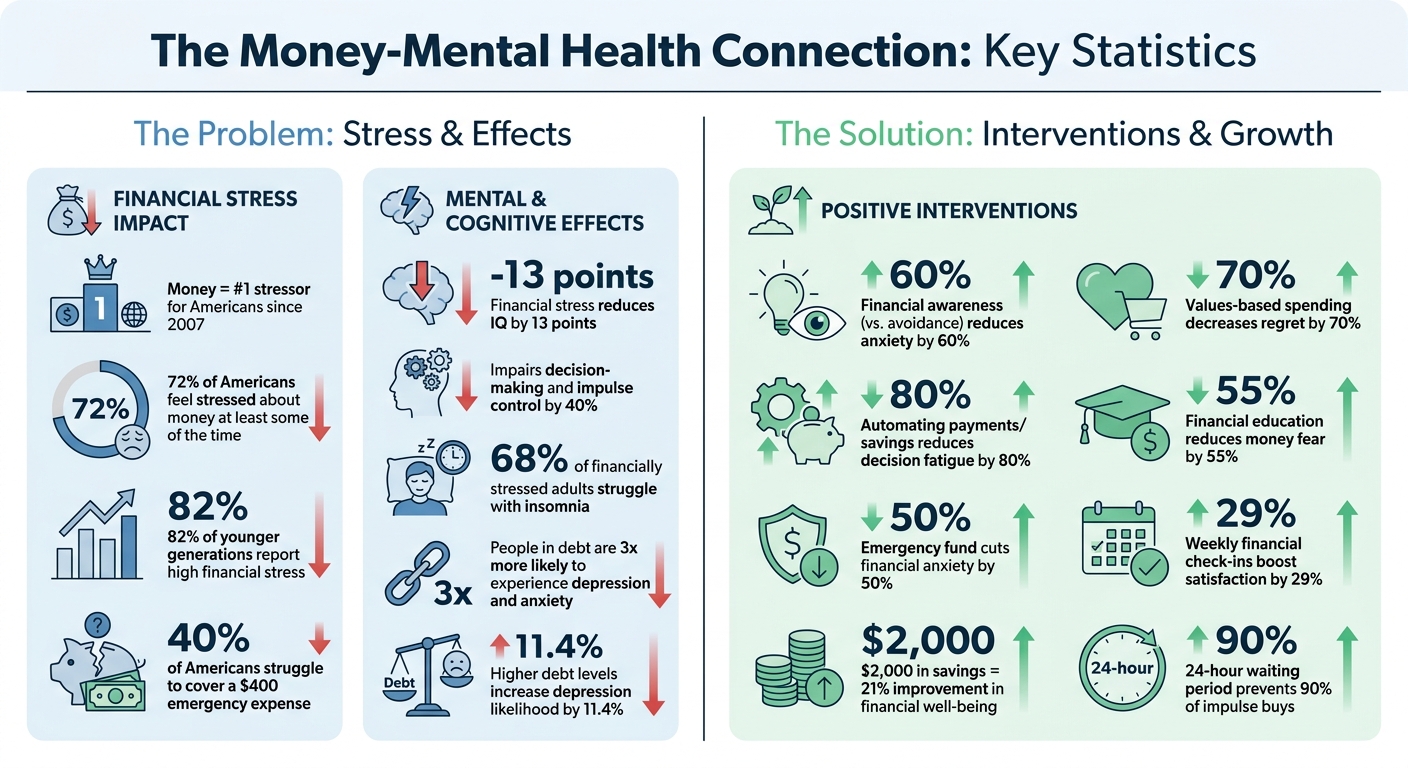
Financial Stress and Mental Health Statistics: The Money-Mind Connection
How Financial Stress Affects Your Mind
Since 2007, money has consistently ranked as the top stressor for Americans, triggering the same fight, flight, or freeze response typically associated with physical threats. This stress doesn’t just linger in your thoughts – it can lead to measurable effects on your brain and body.
Chronic financial stress can sap around 13 IQ points and impair decision-making and impulse control by 40%. Physically, it may show up as shortness of breath or persistent headaches, common symptoms of financial anxiety. Alarmingly, 68% of financially stressed adults report struggling with insomnia.
"We know that money isn’t basic, it requires a bit of mental energy to manage, so being in depression could mean our money is neglected in addition to our physical and mental health needs."
– Khara Croswaite Brindle, Licensed Financial Therapist
This creates a "vicious cycle" where financial troubles worsen mental health, and poor mental health, in turn, leads to financial mismanagement. For instance, individuals in debt are three times more likely to experience conditions like depression and anxiety. When anxiety or depression takes hold, tasks like budgeting or paying bills can feel insurmountable, leading to financial avoidance or impulsive spending that compounds the problem.
Interestingly, financial anxiety doesn’t discriminate by income level. High earners can feel just as overwhelmed as those with lower incomes. Common responses include avoiding financial tasks – like refusing to open bills – or experiencing "spending paralysis", where even essential purchases trigger guilt. Past experiences, such as growing up in poverty or losing a job unexpectedly, can leave lasting imprints on the nervous system, fueling anxiety even after financial stability is achieved.
Understanding these links is crucial. Next, we’ll explore how adopting better money habits can break this cycle.
How Better Money Habits Improve Mental Health
Fortunately, proactive financial habits can help restore emotional balance and mental clarity. Just as poor financial health can harm your mindset, improving your approach to money can have the opposite effect. For example, practicing financial awareness instead of avoidance has been shown to reduce anxiety by 60%. Facing your financial situation head-on, with intention rather than fear, is key to gaining control.
"People can change their thoughts, feelings, and behaviors with money, putting them on the path to a better financial situation."
– Khara Croswaite Brindle, Licensed Financial Therapist
Small, practical changes can make a big difference. Automating payments and savings reduces decision fatigue by 80%, freeing up mental energy for other areas of life. Building an emergency fund can cut financial anxiety by 50%, offering a sense of security. Research also shows that beyond an annual income of $90,000, additional earnings don’t significantly increase day-to-day happiness. This underscores the importance of financial stability over endless accumulation.
Shifting to values-based spending – where your purchases align with your personal priorities – can decrease regret-driven spending by 70%. This approach isn’t about cutting back on everything; it’s about making deliberate choices that bring lasting satisfaction. Financial education also plays a crucial role, reducing fear around money by 55%, and helping transform it from a source of stress into a manageable tool.
"Getting and doing something that sort of helps restore that sense of control really seems to be a critical first step."
– Angela Fontes, Vice President of Policy and Research at Financial Health Network
Improved mental health and better financial habits reinforce each other. Addressing anxiety and depression restores the mental energy needed to manage money effectively, reducing the likelihood of turning to retail therapy or impulsive spending for relief. Simple practices, like waiting 24 hours before making non-essential purchases, can prevent 90% of impulse buys. By prioritizing your mental well-being, you gain the clarity to make sound financial decisions, creating a positive cycle that supports both your mind and wallet.
How to Build Wealth While Protecting Your Mental Health
Budgeting Methods That Reduce Stress
The 50/30/20 framework is a straightforward way to manage your money without overcomplicating things. Here’s how it works: 50% of your income goes to essentials like rent and groceries, 30% to things you enjoy, and 20% to savings or paying off debt. This method balances your needs and wants, helping you stay on track financially without feeling deprived.
Automation can make saving money feel effortless. By setting up automatic transfers to your savings account, you eliminate the daily debate over whether to save or spend. If tracking every single expense feels overwhelming, simplify your approach. Overly detailed budgeting can sometimes backfire, turning every purchase into a source of stress. Instead, try a daily financial check-in. Set aside a specific time each day to review your finances in a calm, comfortable setting – maybe with a cup of tea or a cozy blanket. This routine helps you stay in control without letting money dominate your thoughts.
When reviewing your finances, take a moment to pause and breathe. A few deep breaths or a quick body scan can help you stay calm and focused, preventing your brain from treating financial stress like an emergency. And when you talk to yourself about money, choose language that separates your feelings from your identity. For example, saying, "I feel tight right now", frames the situation as temporary, while "I am broke" can feel permanent and overwhelming. These small shifts in approach can make a big difference in how you handle financial stress.
Once your budgeting system is in place, you can apply similar automation techniques to your investments, making the next step toward building wealth even easier.
Simple Investment Strategies That Minimize Anxiety
With a solid budget in place, investing becomes much simpler – and less stressful. Consistency is key. Regular, automated investments, like contributing to an index fund through platforms such as Vanguard, take the guesswork out of the process. By setting up automatic monthly contributions, you avoid the temptation to react emotionally to market ups and downs.
This method also removes the pressure to time the market. Even a modest emergency fund – say $2,000 – can significantly boost your financial confidence. Studies show that having this safety net is linked to a 21% improvement in financial well-being. It acts as a buffer, turning financial surprises into manageable events rather than crises.
It’s also important to focus on your own financial goals rather than comparing yourself to others. Social comparison can add unnecessary stress, so set clear, achievable milestones that align with your situation. For example, aim to invest a specific percentage of your income, like 15%, by a set date. These concrete goals not only keep you accountable but also provide a sense of accomplishment when you reach them.
Remember, trying to save or invest too aggressively can backfire. Maintaining a 50% savings rate over 15 years is often more realistic than pushing for 80% and burning out. Chronic stress and lack of sleep can impair your financial decisions, so taking care of your mental health is just as important as managing your money.
Paying Off Debt Without the Stress
When it comes to tackling debt, two main strategies can make the process more manageable. The debt snowball method focuses on paying off your smallest balances first, giving you quick wins that build momentum. On the other hand, the debt avalanche method targets debts with the highest interest rates, saving you the most money over time. With credit card APRs averaging around 20.5% in early 2026, understanding how interest adds up – about 1.7% of your balance monthly – can help you see the value in paying down high-interest debts.
| Feature | Debt Snowball | Debt Avalanche |
|---|---|---|
| Primary Focus | Smallest balance first | Highest interest rate first |
| Main Advantage | Motivational boosts through quick wins | Saves the most money overall |
| Best For | Those needing encouragement | Those prioritizing efficiency |
Before diving into a repayment plan, build an emergency fund of $1,000 to $2,000. This cushion can prevent you from going further into debt when unexpected expenses arise. Once you’re ready, list all your debts, including balances, interest rates, and minimum payments. This exercise helps reduce uncertainty and gives you a clear starting point. Even small extra payments – like an additional $50 to $200 per month – can make a big difference, cutting years off your repayment timeline and saving you thousands in interest.
Automating your payments can also ease the mental load. With automatic payments, you don’t have to worry about due dates or late fees, making the process smoother and less stressful. Reducing debt not only strengthens your finances but also lightens the mental weight of financial obligations, proving that good money habits and mental well-being go hand in hand.
Daily Habits for Long-Term Financial and Mental Stability
Building a routine that supports both financial and mental well-being can make a huge difference in your overall quality of life. Here are some habits to help you stay on track.
Using Mindfulness in Your Money Routine
Mindfulness isn’t just about meditation – it can also help you manage your finances with greater awareness. By paying attention to your thoughts around money, you can identify what triggers impulsive spending. Before making a purchase, take a moment to ask yourself: “Is this in line with my budget, or am I acting on emotion?” This small pause can help prevent regret later.
Setting aside time for weekly financial check-ins can also bring order and reduce stress. Spend just 15 minutes each week reviewing your spending, tracking your goals, and noting any emotional patterns that influence your choices. Studies show that people who do this experience a 29% boost in financial satisfaction. When you understand what drives your decisions, you gain the power to make better ones.
Another helpful practice is reflecting on your early experiences with money. Replacing limiting beliefs with healthier ones can reshape your financial mindset. Since financial well-being accounts for 49.2% of the differences in life satisfaction, aligning your spending with your personal values – rather than comparing yourself to others – can lead to greater stability and peace of mind.
Why Emergency Funds Reduce Anxiety
Having an emergency fund can ease financial stress by giving you a safety net for the unexpected. Even a small amount, like $200, can create a sense of security. Over time, aim to save enough to cover three to six months of living expenses, which can significantly reduce financial worries.
Consider this: 40% of Americans would struggle to cover a $400 emergency expense without borrowing or selling something. However, just $2,000 in savings is tied to a 21% higher sense of financial well-being compared to having no savings at all. This cushion can help you avoid falling into debt and give you the freedom to make life-changing decisions – like leaving a toxic job or taking time to focus on your health – without constant financial anxiety.
To protect your emergency fund, keep it in a separate account so you’re not tempted to use it for everyday expenses. Automating monthly transfers can help the fund grow steadily without requiring much effort. Tara Well, Ph.D., a psychology professor at Barnard College, highlights the mental benefits of financial security:
"By increasing predictability and creating a greater sense of stability, financial freedom can help relieve stress and anxiety".
In essence, an emergency fund is more than just money – it’s a source of peace and stability.
Getting Help from Experts and Communities
You don’t have to tackle financial stress on your own. Building financial self-efficacy – the confidence to manage money effectively – can improve your overall well-being. If you’re feeling overwhelmed, consider reaching out to a financial therapist or counselor. These professionals can help you work through the emotional challenges tied to money and develop healthier habits.
Sharing your goals with others can also make a big difference. Whether it’s a friend, family member, or a financial wellness group, having a support system adds accountability. Checking in with an accountability partner every three months can help you track progress, celebrate milestones, and adjust your plans to stay aligned with your values.
It’s worth noting that 72% of Americans feel stressed about money at least some of the time, and 82% of younger generations report high levels of financial stress. You’re not alone in this struggle. By leaning on both professional guidance and a supportive community, you can build a safety net that strengthens both your finances and your mental well-being. These small, consistent practices can help you move closer to lasting financial stability and peace of mind.
Conclusion
Key Takeaways
Financial freedom and mental well-being are deeply connected. As highlighted, 72% of Americans report feeling stressed about money, and higher debt levels can increase the likelihood of depression by 11.4%. Breaking this cycle requires a long-term approach – think of your financial journey as a marathon, not a sprint.
The strategies are simple but impactful: choose budgeting methods that reflect your priorities instead of micromanaging every dollar, invest in ways that don’t demand constant attention, and tackle debt with a realistic plan that doesn’t leave you drained. Even starting with a small emergency fund – just $500 to $1,000 – can provide a sense of security and reduce anxiety. Regularly reviewing your finances can improve overall satisfaction by 29%, showing that consistent, small actions can lead to meaningful change.
It’s also important to protect your mental health while working toward financial goals. True success isn’t just about hitting a number on a spreadsheet – it’s about reaching your goals while staying healthy, happy, and maintaining strong relationships. By aligning your financial habits with your emotional well-being, you can create a balanced and sustainable path forward.
Taking the First Step
Start small. Set up an automatic savings transfer or commit to a 15-minute weekly financial check-in to ease into the process. You could also focus on identifying one emotional trigger that leads to impulse spending – awareness is a powerful tool.
If financial stress feels overwhelming, consider reaching out to a financial therapist or connecting with a supportive community. You’re not alone, and seeking help is a sign of strength. Remember, this journey is personal, so tailor these strategies to your unique situation. Aim for progress, not perfection, and allow yourself to spend on things that bring genuine happiness. By giving equal attention to your financial health and mental well-being, you can create a life that feels both secure and fulfilling.
FAQs
How do I start if money talk triggers anxiety?
Starting with small steps can make financial stress feel less daunting. Begin by recognizing your emotions and taking simple, manageable actions – like quickly checking your account balance or scheduling a set time to review your finances. The goal isn’t to be perfect but to make steady progress. Incorporating stress-relief techniques, such as deep breathing, can also make a difference. If it still feels too overwhelming, reaching out to a trusted friend or a mental health professional can provide valuable support as you build your confidence over time.
Should I pay off debt or build an emergency fund first?
Starting with a small emergency fund – around $1,000 – is often recommended by experts. This amount can cover unexpected expenses like car repairs or medical bills without derailing your finances. After that, the focus should shift to paying off high-interest debt, such as credit cards, which can quickly accumulate costly interest. Once that debt is managed, aim to grow your emergency fund to cover 3–6 months of living expenses. This strategy provides a safety net for unforeseen circumstances while minimizing the impact of high-interest rates on your financial health.
What’s the simplest way to invest without stressing out?
Investing doesn’t have to be complicated or stressful. One of the easiest ways to keep things simple is by choosing low-maintenance strategies like automated or passive investing. Options such as index funds or robo-advisors are designed to require minimal effort on your part while still keeping your money working for you.
To start, make sure you have clear financial goals in mind. Break them down into realistic targets that align with your comfort level. It’s also wise to steer clear of high-risk or overly complex investments that could add unnecessary pressure.
Another helpful tip? Pay attention to your spending habits and be mindful of what triggers unnecessary expenses. This approach can make your investment journey feel much more manageable and less overwhelming.
Related Blog Posts
- Emergency Fund Goal Calculator for Peace
- Budget Not Working? 5 Common Mistakes to Fix Now
- Why Budgets Fail: Common Mistakes Explained
- 10 SMART Financial Goal Examples

Karla Moss is a CPA and former startup Controller who spent 15 years managing finance at the executive level — including inside a company that grew to unicorn status. She founded Karla & Co. to bring real-world financial clarity to everyday money decisions. She’s based in Phoenix, AZ and writes from personal experience as much as professional expertise.