
When money is tight, it’s crucial to focus on payments that protect your basic needs and prevent severe consequences. Here’s the quick order to prioritize:
- Housing (rent/mortgage): Avoid eviction or foreclosure.
- Utilities (electricity, water, heat): Prevent shutoffs that affect health and safety.
- Food and Transportation: Ensure access to essentials and the ability to get to work.
- Health Costs (insurance, prescriptions): Avoid worsening medical issues.
- Legal Obligations (child support): Prevent wage garnishment or legal trouble.
- Secured Debts (car loans): Avoid repossession of critical assets.
- Unsecured Debts (credit cards): While late fees and credit score damage hurt, they’re less urgent.
- Subscriptions/Extras: Cancel non-essentials to free up cash.
Key Steps:
- List Income & Expenses: Know exactly what you’re working with.
- Separate Needs from Wants: Focus on essentials like housing, food, and health.
- Contact Creditors Early: Ask about hardship programs or payment plans.
- Cut Non-Essentials: Cancel subscriptions, dine at home, and reduce extras.
- Explore Assistance: Programs like SNAP or LIHEAP can help with food and utilities.
If you still can’t cover everything, prioritize secured debts and negotiate with creditors. Use a simple, bare-bones budget to ensure essentials are paid first.
What bills should you pay first? Financial expert on how to make ends meet during the shutdown
sbb-itb-0a60575
Step 1: Take Stock of Your Financial Situation
Start by evaluating your income, upcoming bills, and discretionary expenses. This will help you prioritize what needs to be paid first.
List All Your Income Sources
Write down every dollar you expect to bring in over the next 30 days. Include your regular paycheck, any benefits, earnings from side gigs, and even one-time income sources. Make sure to focus on your take-home pay – the amount left after taxes, deductions, and contributions – so you know exactly how much you have available to work with.
"The very first step is to figure out if your income covers all of your current expenses." – UW-Madison Division of Extension
Once you know your total income, create a detailed list of your bills to align them with your income schedule.
List All Your Upcoming Bills and Expenses
Write down each bill along with its due date, the minimum payment required, and the potential consequences of not paying it.
| Category | Examples | Consequences |
|---|---|---|
| Housing | Rent, mortgage | Eviction or foreclosure |
| Work/Legal essentials | Car loan, child support, cell phone | Repossession, job loss, legal action |
| Unsecured debt | Credit cards, personal loans | Credit score damage, late fees |
| Discretionary | Streaming, gym memberships | Service cancellation only |
This table helps you identify which bills carry serious consequences and which ones are more forgiving if delayed.
Separate Needs from Wants
Once you’ve mapped out your income and bills, it’s time to distinguish between essential expenses and those that are more flexible. Needs include housing, utilities, groceries, transportation to work, and any court-ordered obligations like child support. Wants, on the other hand, cover things like dining out, streaming subscriptions, and entertainment.
If skipping a payment could lead to eviction, repossession, losing your job, or legal trouble, it’s a need. If the worst-case scenario is losing access to a service, it’s a want. Also, don’t overlook small, recurring expenses – like daily coffee runs or vending machine snacks – that can quietly add up. Swapping these for cheaper alternatives can free up extra funds.
Step 2: Rank Your Expenses by Priority
What to Pay First When Money Is Tight: Bill Priority Guide
Now that you’ve outlined your income and expenses, it’s time to organize them by importance. The goal is to focus on the bills that have the most immediate and serious consequences if left unpaid.
Pay Housing and Utilities First
Your rent or mortgage should always come first. Falling behind on housing payments can create a domino effect, making other financial challenges harder to overcome. After housing, prioritize essential utilities like electricity, water, and heat. Losing access to these can pose risks to both health and safety.
Budget for Food and Transportation Next
After housing and utilities, focus on food and transportation. These are fundamental for maintaining your health and ensuring you can get to work or other essential places. This category also includes costs like fuel, necessary car payments, and childcare – expenses that help keep daily life running smoothly.
Cover Health Costs and Legal Payments
Health-related expenses, such as insurance premiums and prescriptions, should be next on your list. Keeping up with these can prevent larger medical costs down the road. Legal obligations, like child support, also require prompt payment. Falling behind on these can lead to wage garnishment or other legal issues.
Handle Debt Payments Last Among Priorities
When it comes to debt, focus first on secured obligations, like car loans, since missing these payments can lead to repossession. Unsecured debts, such as credit card balances, should come afterward. While late payments on credit cards can hurt your credit score and result in fees, they don’t immediately disrupt your daily life. Medical bills often have more flexible payment options, so they can be placed lower on the list.
"If you cannot pay a high priority bill, paying a lower priority bill instead often makes the situation worse. For example, keeping up with credit cards while falling behind on rent is usually a dangerous trade." – Understood Care
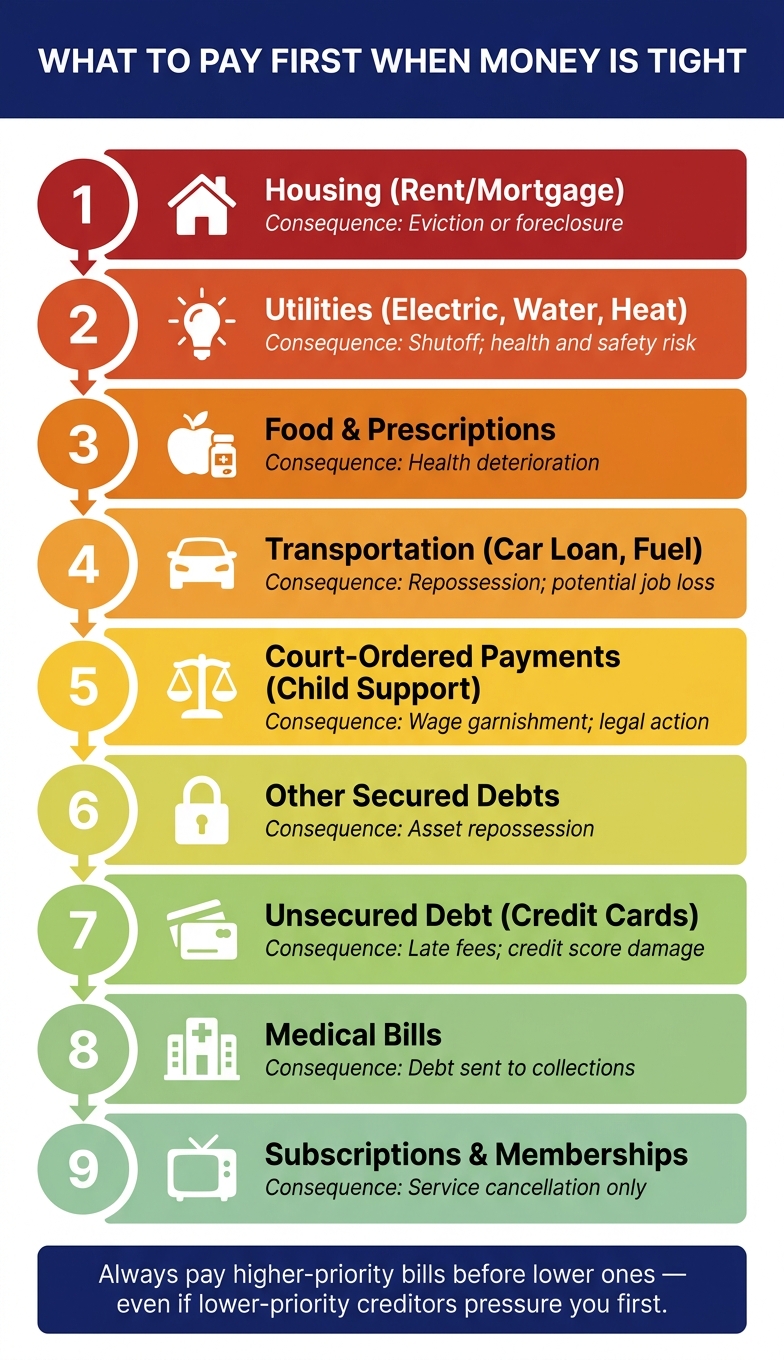
Here’s a quick summary of how to rank your expenses:
| Priority | Expense Type | Consequence of Skipping |
|---|---|---|
| 1 | Housing (rent/mortgage) | Eviction or foreclosure |
| 2 | Utilities (electric, water, heat) | Shutoff; increased health and safety risk |
| 3 | Food and prescriptions | Health deterioration |
| 4 | Transportation (car loan, fuel) | Repossession; potential job loss |
| 5 | Court-ordered payments | Wage garnishment; legal action |
| 6 | Other secured debts | Asset repossession |
| 7 | Unsecured debt (credit cards) | Late fees; credit score damage |
| 8 | Medical bills | Debt sent to collections |
| 9 | Subscriptions/memberships | Service cancellation |
Up next, explore ways to manage unpaid bills when your funds still fall short.
Step 3: What to Do When You Still Cannot Cover Everything
After prioritizing your payments, if you’re still falling short, there are practical steps you can take to manage unpaid bills and reduce financial stress.
Reach Out to Creditors and Service Providers
The first thing you should do is contact your creditors before missing a payment. Many landlords, lenders, and utility companies offer hardship programs, even if they don’t openly advertise them. When you make the call, have your financial details ready – your income, available cash, and the minimum payment amount. Ask about options like waiving late fees, deferring payments temporarily, or adjusting your due date to better align with your paycheck.
Credit card companies and auto lenders often have formal hardship plans, and many utility providers now offer protections backed by state programs. Keep track of your conversations by noting the date, the representative’s name, and the key points discussed.
"The earlier you reach out, the more options you often have." – Understood Care Editorial Team
If negotiating terms isn’t enough to bridge the gap, it’s time to look at ways to either cut costs or increase income.
Find Ways to Bring In More Money or Spend Less
Take a close look at your budget and cut out non-essential expenses immediately. Cancel subscriptions, skip dining out, and switch to generic brands to save cash quickly. For extra income, consider gig work, selling items you no longer use, or taking on additional hours at work.
If your financial situation is especially tight, federal programs like SNAP (food assistance) and LIHEAP (home energy assistance) can provide relief. You can also dial 211 to connect with local resources for help with food, housing, or utility bills.
Decide Which Bills to Defer and Which to Pay
Once you’ve trimmed expenses and explored ways to earn more, decide which bills can be safely deferred. Not all unpaid bills carry the same level of risk. Secured debts, such as car loans, are tied to assets that can be repossessed, so they should take priority. On the other hand, unsecured debts like credit cards or medical bills often have more flexible repayment options. Medical bills, in particular, frequently offer repayment plans or charity care programs, making them a better candidate for deferral.
If a debt has already been sent to collections, request a written validation notice to ensure the debt is accurate and belongs to you.
"If you owe money you can’t pay, it’s better to offer a small payment than none at all." – Jeff Michael, Author, Credit.org
Even a partial payment on a critical bill can show good faith and may help prevent further action. For more structured help, consider reaching out to nonprofit organizations like the National Foundation for Credit Counseling (NFCC) or the Financial Counseling Association of America (FCAA). They offer professional advice at little to no cost, helping you create a realistic repayment plan.
Step 4: Build a Bare-Bones Budget for the Month Ahead
With your expense priorities identified and creditor discussions in progress, it’s time to map out a plan for the upcoming month. A bare-bones budget isn’t about perfection. Instead, it’s about making sure your most essential needs are covered first, while less urgent expenses take a backseat.
Write Out a One-Month Spending Plan
Start with the basics: list all your income sources and expenses. This simple step gives you a clear picture of where your money is coming from and where it’s going. As Chad Parks, founder and CEO of Ubiquity Retirement + Savings, explains:
"Compile a clear snapshot of your finances because what generally happens with people is that we’ve got almost everything on automatic. You lose touch with the real numbers – you forget how much things are and you forget the impact that can have on your monthly budget."
Once you have everything laid out, prioritize your spending. Begin with essentials like housing, food, and transportation – what Parks refers to as the "Big Three." After those are accounted for, move on to insurance and minimum debt payments. Any leftover funds can then go toward less critical expenses. Take a close look at your credit card statements to identify any forgotten subscriptions or recurring charges you can cancel to free up extra cash. Use a zero-based budgeting approach, assigning every dollar a specific purpose, with essentials taking precedence.
Set Up Automatic Payments for Critical Bills
Once your spending plan is ready, automate payments for your top-priority bills – such as rent, utilities, and other necessities. Scheduling these payments for right after your paycheck arrives helps ensure you don’t miss due dates, even during stressful times. Automation is especially helpful for keeping the essentials on track, but it’s important to regularly check your account balances. If your income fluctuates, consider setting automatic payments for a day or two after your expected deposit to avoid overdraft fees.
Review and Update Your Budget After Each Paycheck
Your budget isn’t a static document – it should evolve with your circumstances. As Arizona Central Credit Union advises:
"Life changes, and so should your budget. If you lose a job, take on a new bill, or start earning more, revisit your priorities."
After each paycheck, review your bank statements for new charges, adjust for any changes in bills, and reallocate funds as needed. It’s also a good idea to look ahead and project your finances six to 12 months into the future. Comparing your essential expenses to your available funds can help you understand how long you can sustain your current situation. This insight can guide decisions about seeking additional income, applying for assistance, or negotiating with creditors.
Conclusion: Moving from Crisis to Stability
A Quick Recap of the Prioritization Process
Facing financial challenges often means making tough decisions, but having a clear plan can make those choices feel less overwhelming. The key is to prioritize your essentials: start with housing and utilities, then focus on food, transportation, and mandatory payments. Unsecured debts, like credit cards, should come last. As Miranda Marquit from FinanceBuzz explains:
"A missed credit card payment is unlikely to have as large a negative impact on your ability to meet your immediate needs."
With these priorities in mind, you’re better equipped to take actionable steps toward financial stability.
Your Next Steps Toward Financial Stability
Getting through a tough financial period is no small feat. Now, it’s time to shift your focus toward creating a more stable foundation. Start with your bare-bones budget and any agreements you’ve made with creditors. From there, work on reducing debt. Whether you prefer the Snowball Method for quick, morale-boosting wins or the Avalanche Method to minimize interest costs, pick the approach that keeps you motivated.
Government assistance programs like SNAP (for food) and LIHEAP (for energy bills) can also help free up room in your budget as you rebuild. If you’re feeling unsure about where to begin, HUD-approved housing counselors and nonprofit credit counseling agencies can provide affordable or even free advice. They can guide you through repayment plans and help you understand your rights as a consumer.
For straightforward tips on budgeting and saving, check out Karla & Co..
FAQs
What should I do first if I can’t pay my rent in full?
If you can’t pay your rent in full, it’s important to act fast. Reach out to your landlord as soon as possible and explain your situation. See if they’re open to discussing payment plans or other hardship arrangements. Make sure any agreements you reach are documented in writing to safeguard your housing. Acting quickly can help you avoid bigger issues down the line.
Will paying utilities late get my service shut off right away?
Paying your utility bills late typically won’t lead to an instant disconnection of services. However, if the overdue balance lingers too long, there’s a risk of your service being cut off. To prevent this, reach out to your utility provider promptly. Many companies offer payment plans or hardship programs designed to help you stay on top of your bills and maintain your services.
How do I ask a creditor for a hardship plan?
When facing financial difficulties, contact your creditor directly to explain your situation. You can do this over the phone, online, or by sending a hardship letter.
If you choose to write a letter, make sure to include:
- Your name
- Account number
- A clear explanation of your financial hardship (e.g., job loss or medical expenses)
In the letter, propose a possible solution, such as reduced payments or a temporary pause on your obligations.
If you prefer to call, briefly explain your circumstances and ask about any hardship programs or options they offer. This proactive approach can help you work toward regaining financial stability.
Related Blog Posts
- 7 Ways to Pay Off Credit Card Debt Faster
- Budget Not Working? 5 Common Mistakes to Fix Now
- Needs vs Wants: Budgeting for Major Purchases
- Why Budgets Fail: Common Mistakes Explained

Karla Moss is a CPA and former startup Controller who spent 15 years managing finance at the executive level — including inside a company that grew to unicorn status. She founded Karla & Co. to bring real-world financial clarity to everyday money decisions. She’s based in Phoenix, AZ and writes from personal experience as much as professional expertise.